
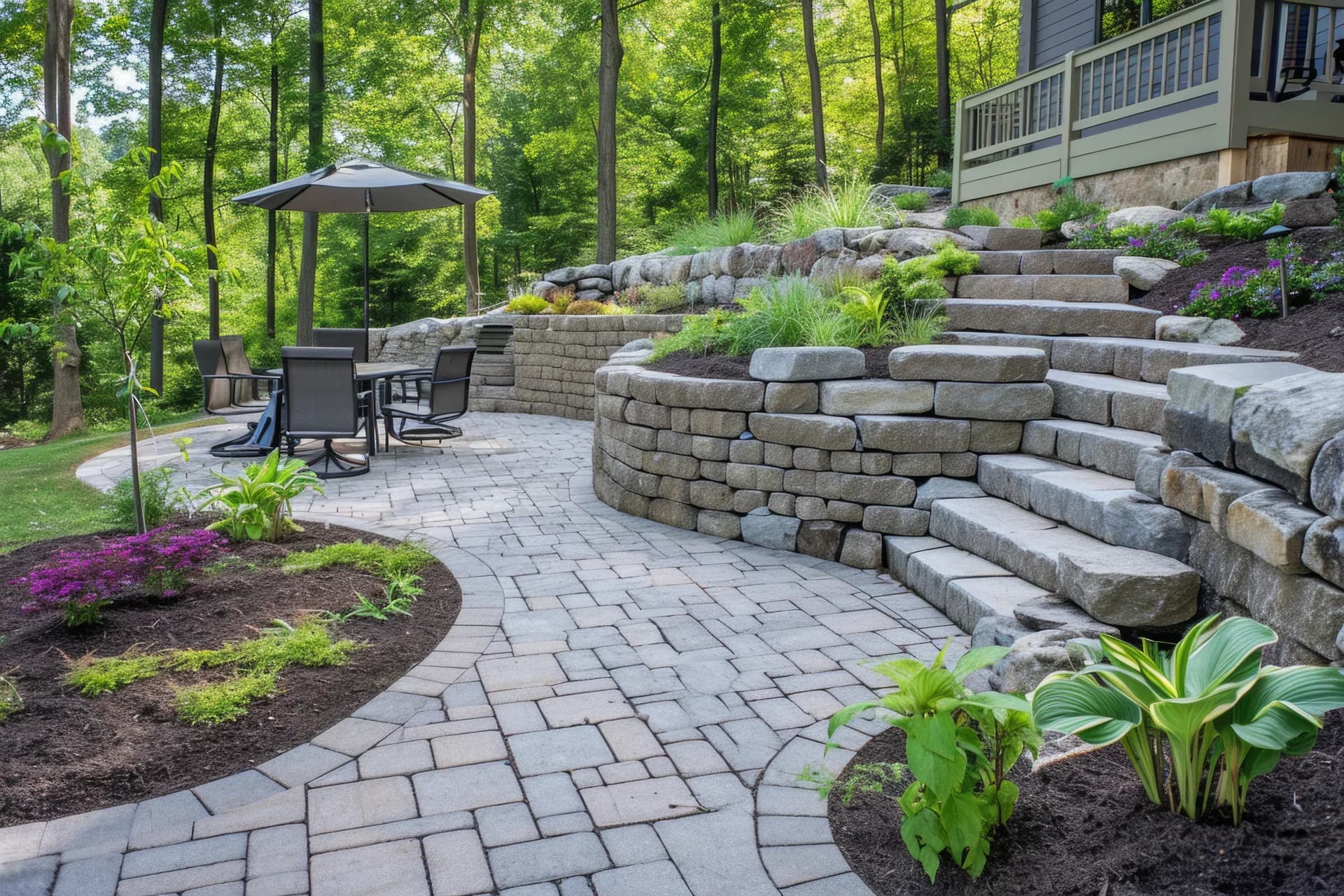
Retaining Walls in Palmer Ranch, FL
Control grade. Create space.
Free Estimate in Palmer Ranch
On-site visit, written proposal, no obligation. Response within 24 hours.
Request Free Estimateor call (941) 735-0920Retaining Walls in Palmer Ranch, Florida
Palmer Ranch properties with grade changes, drainage challenges, or erosion issues benefit from professionally engineered retaining walls. NNPavers designs and builds walls that solve real problems while enhancing your outdoor space.
Palmer Ranch is a master-planned community with active HOAs governing TPC Prestancia, Deer Creek, and other neighborhoods. Every paver project requires pre-approval with color samples and material specs submitted in advance.
Uneven lots, erosion, and drainage issues are common across Sarasota and Manatee County. A properly engineered retaining wall solves these problems permanently, creating usable outdoor space while protecting your property and landscaping.
Why Palmer Ranch Homeowners Choose Pavers
- Controls erosion and grade changes on sloped lots
- Redirects drainage away from foundations
- Creates terraced outdoor spaces on challenging lots
- Sitting walls double as outdoor seating
- Engineered to Florida specifications (walls >4ft require PE stamp)
We've never had a Palmer Ranch HOA submittal rejected — we review specs before we recommend anything.
Common Questions About Retaining Walls in Palmer Ranch
Do retaining walls require permits in Florida?
Walls under 4 feet typically do not require permits, but local codes vary. Walls over 4 feet require a Professional Engineer (PE) stamp in Florida. We advise on permit requirements during your free estimate.
What materials are retaining walls built from?
We work with segmental retaining wall blocks (Allan Block, Versa-Lok), natural stone, and poured concrete with paver cladding. Material choice depends on wall height, soil conditions, and aesthetic preferences.
Can a retaining wall double as seating?
Yes — sitting walls are one of our most popular add-ons for patios and outdoor living areas. A wall built at 18–24 inches height with a flat cap creates functional seating without additional furniture.